Friday, October 28, 2011

Whooping Crane 2011 Images


Whooping Crane
The Whooping Crane is the most famous endangered bird in North America. In part because it is large, distinctive, and photogenic and partly because, since 1967, Canadians and Americans have cooperated in a successful recovery program to safeguard it from extinction.

It is believed that approximately 1,400 whooping cranes existed in 1860. Their population declined because of hunting and habitat loss until 1941 when the last migrating flock dwindled to an all-time low of 15 birds. The wild flock has slowly increased to over 180 in late 1999. This flock winters in and around Aransas National Wildlife Refuge on the Gulf coast of Texas. In spring, they migrate north, nesting in Wood Buffalo National Park, which straddles the border of Alberta and Northwest Territories in Canada. This flock of whooping cranes is the only naturally occurring wild population in the world. Scientists have long recognized the risk of having all of the wild whooping cranes using one wintering and breeding location. With all the wild birds concentrated in one small area, the population could be wiped out by disease, bad weather, or human impacts. Whooping crane survival depends on additional, separated populations.
 Whooping Crane
 Whooping Crane
 Whooping Crane
 Whooping Crane
Whooping Crane

Saturday, October 1, 2011

Geckos Morphs

Geckos Morphs
Leopard Geckos are one of the most popular reptiles being kept in the US, and in Europe. They have been captive bred long enough, to produce many different Morphs.
Geckos Morphs
Geckos Morphs
Geckos Morphs
Geckos Morphs
Geckos Morphs

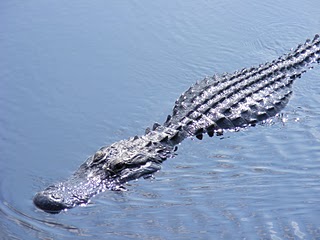
American Alligator Images 2011

American Alligator
American crocodiles are more susceptible to cold than American alligators.[6] Unlike the American alligator which can subsist in water of 7.2 °C (45.0 °F) for some time, an American crocodile would become helpless and drown. American crocodiles, however, have a faster growth rate than alligators, and are much more tolerant of salt water. Unlike the Old World crocodiles which are sometimes cleared of parasites by birds, the American crocodile relies more on fish for parasite removal. Newborn hatchlings are about 22 centimetres (8.7 in) in size and about 60 grams (2 oz) in mass. The average adult is 4 metres (13 ft) long and weighs 382 kilograms (840 lb) in males, and 3 metres (9.8 ft) and 173 kilograms (380 lb) in females.

In the Tárcoles River in Costa Rica there are dozens of 4-meter and a few 5-meter individuals that frequent bridge crossings (where they are fed daily, which may have helped them reach such consistently large sizes) and are a popular tourist attraction. In the United States adult length has been recorded as high as 4.9 metres (16 ft). This species is said to grow largest in the South American river basins, but even old males rarely reach 6 metres (20 ft). A skull of this species was found to measure 72.6 centimetres (28.6 in) and is estimated to have belonged to a crocodile of 6.6 metres (22 ft) in length. Large, mature males regularly weigh about 400-500 kg (880-1100 lb), with the 6 meter+ individuals surpassing 1000 kg (2,200 lb). The longest American crocodile ever actually measured from snout to tail is a 17 feet (5.2 m) male living within the Tarcoles River of Costa Rica.

Images:
American Alligator
American Alligator
American Alligator
American Alligator
American Alligator

Friday, September 23, 2011

Bird Prey Wallpapers For Desktop 2011

Bird Prey Wallpapers
Bird Prey
Bird Prey
Bird Prey
Bird Prey
Bird Prey
Bird Prey

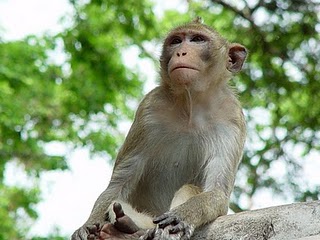
Monkeys Cute Wallpapers For Desktop 2011

Monkeys Cute Wallpapers
Monkeys Cute
Monkeys Cute
Monkeys Cute
Monkeys Cute
Monkeys Cute
Monkeys Cute

Monday, September 19, 2011

Africa White Tiger Pictures 2011

Africa White Tiger Pictures
 White Tiger
 White Tiger
 White Tiger
 White Tiger Kids
 White Tiger
 White Tiger

Trout Fish Images 2011

Trout Fish
The rainbow trout is native only to the rivers and lakes of North America, west of the Rocky Mountains, but its value as a hard-fighting game fish and tasty meal has led to its introduction throughout the world.
Rainbow trout, also called redband trout, are gorgeous fish, with coloring and patterns that vary widely depending on habitat, age, and spawning condition. They are torpedo-shaped and generally blue-green or yellow-green in color with a pink streak along their sides, white underbelly, and small black spots on their back and fins.
They are members of the salmon family and, like their salmon cousins, can grow quite large. They average about 20 to 30 inches (51 to 76 centimeters) long and around 8 pounds (3.6 kilograms), but can grow as long as 4 feet (1.2 meters) and weigh up to 53 pounds (24 kg).
They prefer cool, clear rivers, streams, and lakes, though some will leave their freshwater homes and follow a river out to the sea. These migratory adults, called steelheads because they acquire more silvery markings, will spend several years in the ocean, but must return to the stream of their birth to spawn.
Rainbow trout survive on insects, crustaceans, and small fish. Their populations are healthy worldwide and they have no special status or protections. However, they are now considered a non-native pest species in some areas where they have been introduced.


Images:
Trout Fish
Trout Fish
Trout Fish
Trout Fish
Trout Fish

LinkWithin

Related Posts Plugin for WordPress, Blogger...